
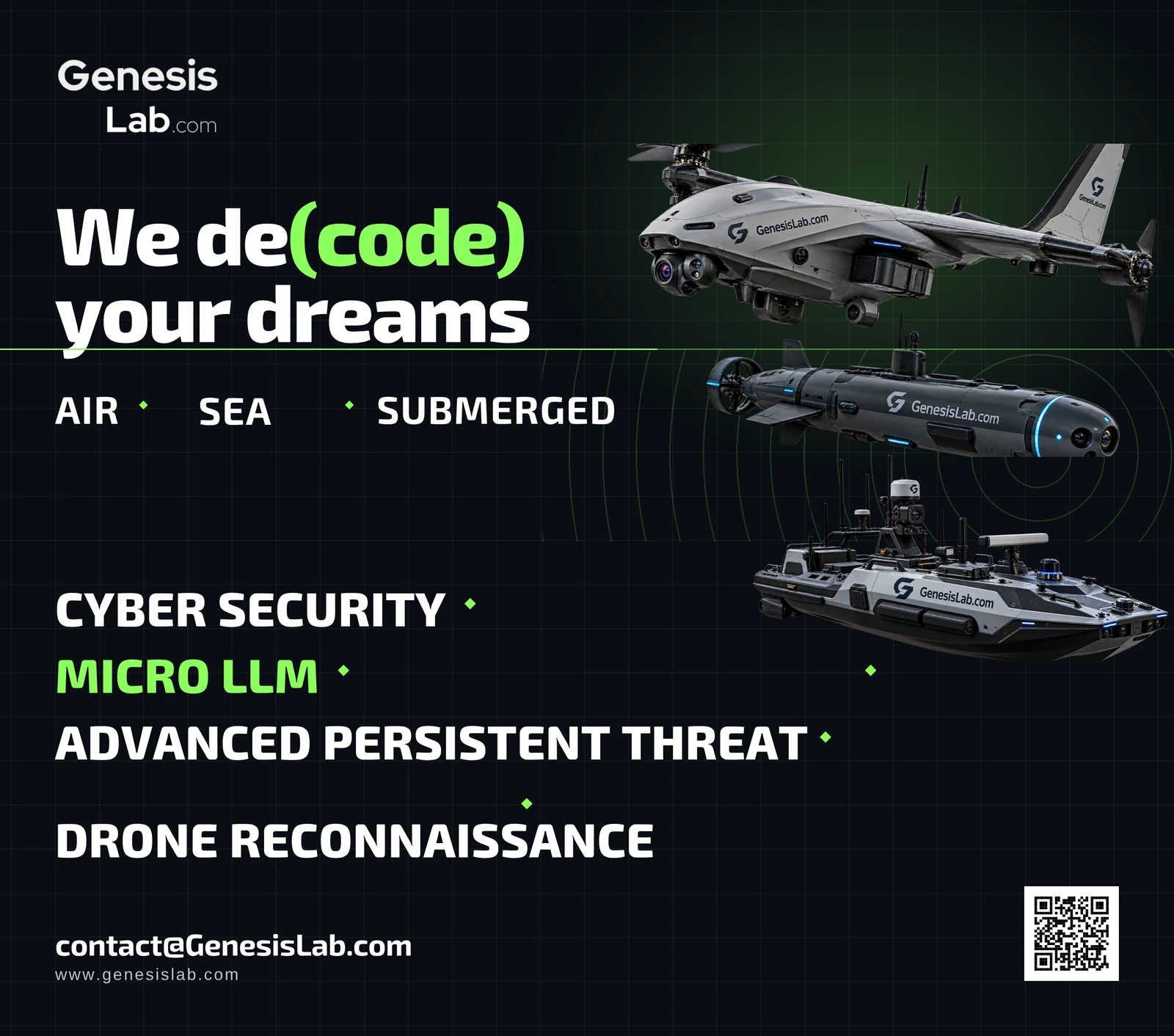
- Air
- Sea
- Submerged
Cyber Drones
Secure reconnaissance in the air, on the water, and below the surface. We bring cyber security, machine learning, and on-board Micro LLM intelligence to uncrewed platforms, so your mission stays protected from launch to recovery.
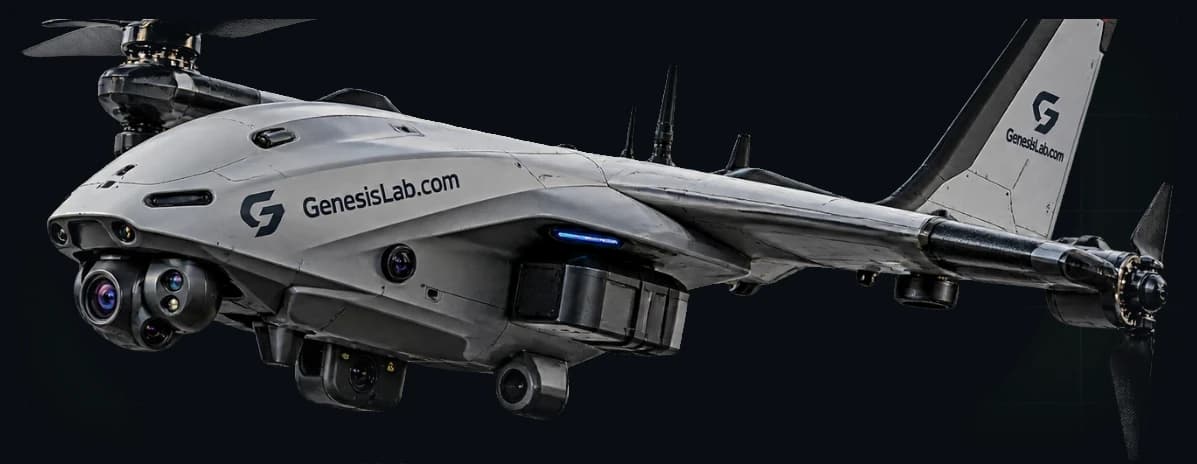

Where Cyber Security Meets Uncrewed Systems
A modern drone is a connected computer that moves. Its sensors, radio links, and control software are as exposed as its airframe. Genesis IT Lab applies its background in cyber security, Web3, and machine learning to uncrewed platforms, treating security and on-board intelligence as part of the vehicle from the start.
One Approach Across Three Domains
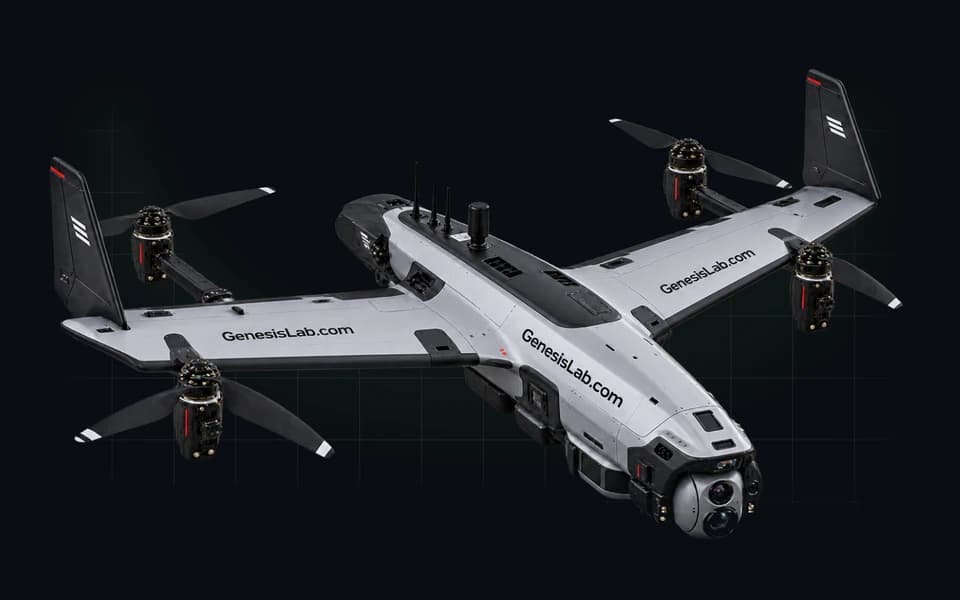
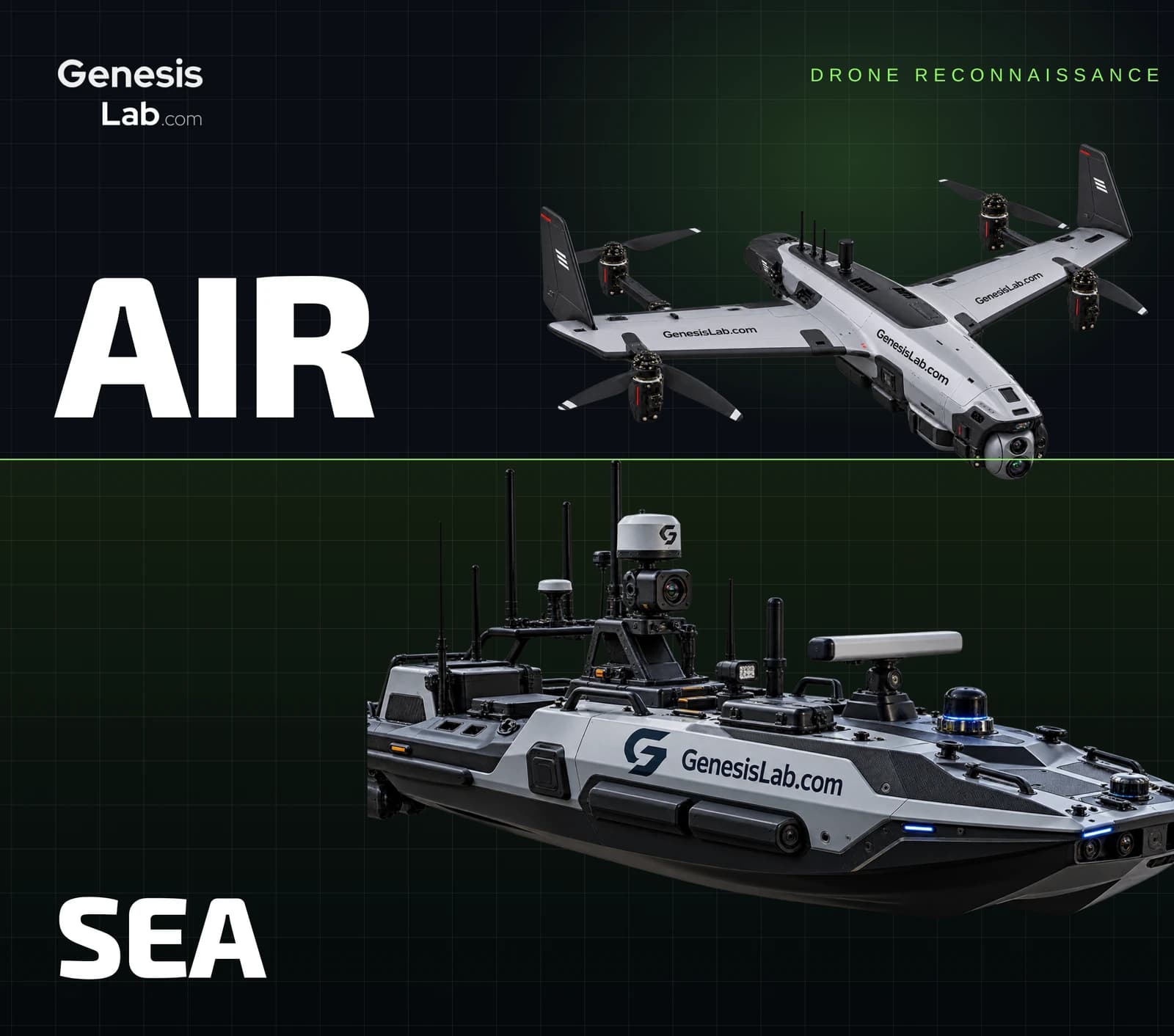
Air
A tilt-rotor aircraft that lifts off vertically and flies on its wings for wide-area observation. A multi-sensor camera gimbal and antenna array support imaging and data collection over land and coastline.
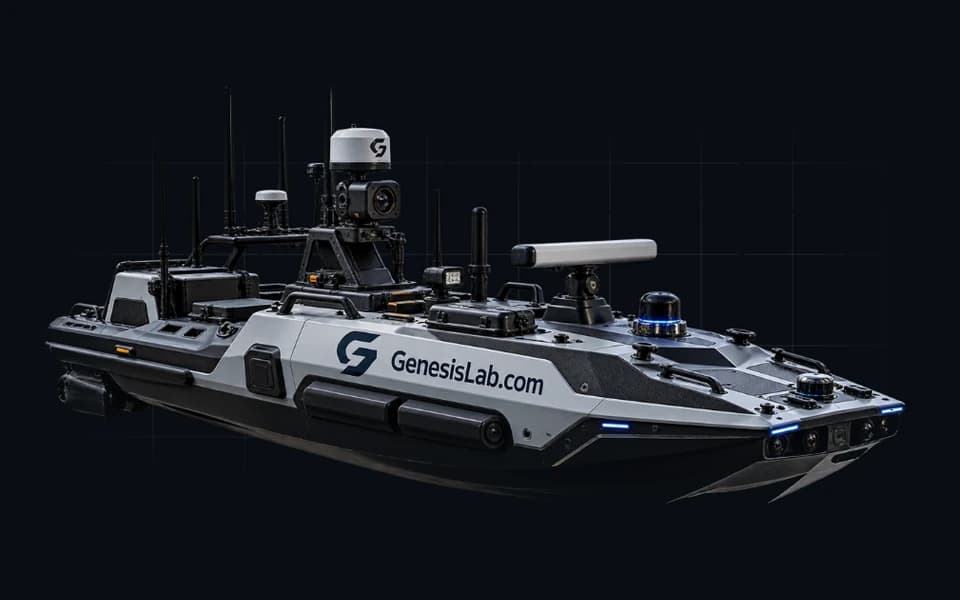
Sea
An uncrewed surface vessel carrying radar, a mast-mounted camera, communications equipment, and a forward camera array for maritime awareness in coastal and open water.
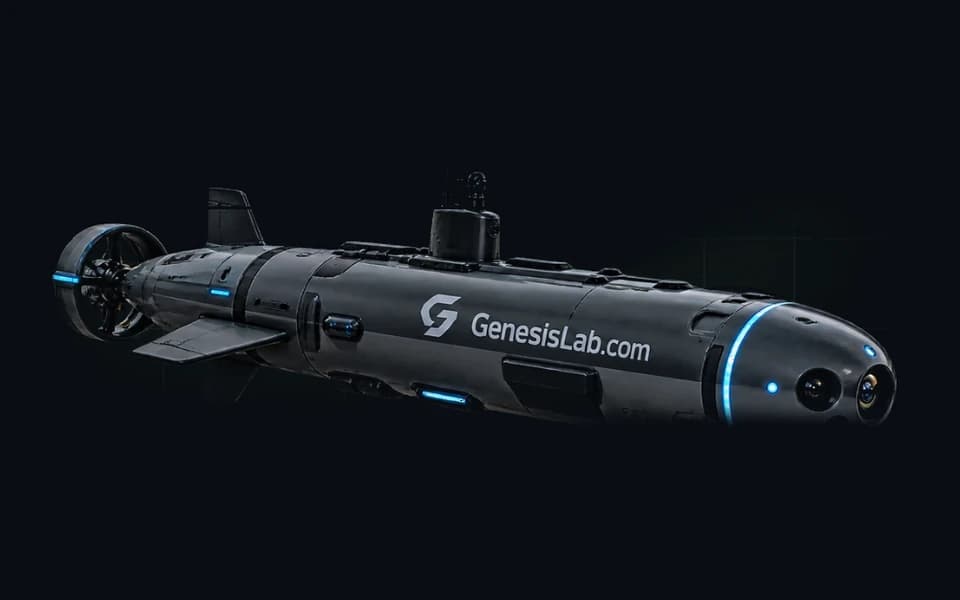
Submerged
A streamlined underwater vehicle with twin forward cameras and a shrouded stern thruster, built for observation below the surface, out of reach of air and surface sensors.
Drone Reconnaissance
Reconnaissance only helps when the data is timely, trustworthy, and protected. We plan each mission around that data, from what is collected to how it travels and who can use it.
Imaging and sensing across land, coastline, and open water
Protected command, control, and data links
On-board processing that reduces reliance on the link
Air and sea platforms working toward one mission picture
What Powers Every Mission
Four areas of expertise come together in every platform we work on.
Cyber Security
Hardened firmware, encrypted communications, and ongoing testing of the links, ground stations, and software a platform depends on.
Web3 and Machine Learning
Machine learning turns sensor feeds into usable detections, while tamper-evident ledgers help keep a verifiable record of mission data.
Micro LLM
Compact language models that run on the vehicle itself, so operators can query and summarize sensor data even when connectivity is limited.
Cyber Drones
Air, sea, and submerged platforms that bring these technologies together in one mission-ready system.
Built to Withstand Advanced Persistent Threats
Advanced persistent threats are patient, well resourced, and focused on long-term access. An uncrewed fleet offers many ways in, from radio links and ground stations to supply chains and software updates. We design for that reality from day one.
Threat modeling for each mission profile
Penetration testing of vehicles, links, and ground systems
Signed firmware and controlled update paths
Monitoring that flags unusual behavior across the fleet
Our Process
1
Mission Scoping
We define your operating environment, objectives, and security requirements.
2
Platform Configuration
We match the air, sea, or submerged platform and its payload to the mission.
3
Secure Integration
We integrate communications, on-board intelligence, and protections, then test them against realistic threats.
4
Deployment & Support
We support deployment, operator training, and ongoing updates as your mission evolves.
Ready to Plan Your Mission?
Tell us what you need to observe and where you need to operate. Our team will help you define the right platform, security requirements, and next steps.
Or email us at contact@genesislab.com
Frequently Asked Questions
What is a cyber drone?
A cyber drone is an uncrewed air, sea, or underwater platform designed with cyber security and on-board intelligence as core parts of the system, alongside its sensors and communications.
Which environments do you cover?
We work across three domains: in the air, on the water's surface, and submerged.
What is a Micro LLM?
A Micro LLM is a compact language model small enough to run on a vehicle's own hardware. It helps summarize and interpret sensor data close to where it is collected, including when connectivity is limited.
How do we get started?
Email contact@genesislab.com or use the form below. We start with a consultation about your mission and requirements.


